

Can Christians Have Demons? Understanding Demonic Oppression, the Flesh, Trauma, and Spiritual Bondage
One of the most controversial questions in Christianity today is this:
“Can Christians have demons?”
For some people, the answer seems obvious. Others immediately dismiss the idea as superstition, psychological instability, or religious extremism. Some Christians believe every problem is caused by demons, while others deny demonic influence altogether.
The truth is that this subject requires wisdom, discernment, biblical balance, and intellectual honesty.
Not every emotional struggle is caused by a demon. Not every intrusive thought is spiritual oppression. Not every mental illness is demonic. There are real neurological, psychological, emotional, and medical conditions that should never be ignored or automatically labeled as spiritual bondage.
At the same time, the Bible clearly teaches that demonic oppression is real. Jesus spent much of His earthly ministry healing the sick, casting out demons, and setting captives free. To completely ignore the spiritual dimension of human suffering is also unbiblical.
The goal of this article is not to create fear or obsession with demons. The goal is discernment, healing, freedom, and truth.
Can a Christian Be Possessed?
The answer depends largely on definitions.
A true Christian belongs to Jesus Christ. Scripture teaches that believers are purchased by the blood of Christ and sealed by the Holy Spirit. In that sense, a Christian cannot be “owned” by Satan.
However, many Christians experience oppression, torment, bondage, harassment, spiritual attack, and areas of captivity.
Some ministers avoid the word “possession” entirely and instead use the term “demonization” or “oppression.” This distinction matters.
Ownership is different from influence.
A Christian may genuinely love God and still struggle with severe fear, rage, lust, tormenting thoughts, addiction, bitterness, self-hatred, or spiritual oppression. Salvation begins the process of freedom, but believers still go through sanctification, healing, renewal of the mind, and sometimes deliverance.
Many Christians have prayed, worshipped, and attended church faithfully while secretly battling destructive thoughts, compulsions, uncontrollable rage, suicidal thinking, sexual torment, chronic fear, or spiritual darkness they could not explain.
The existence of a struggle does not automatically mean someone is unsaved.
Spiritual Warfare Is Real
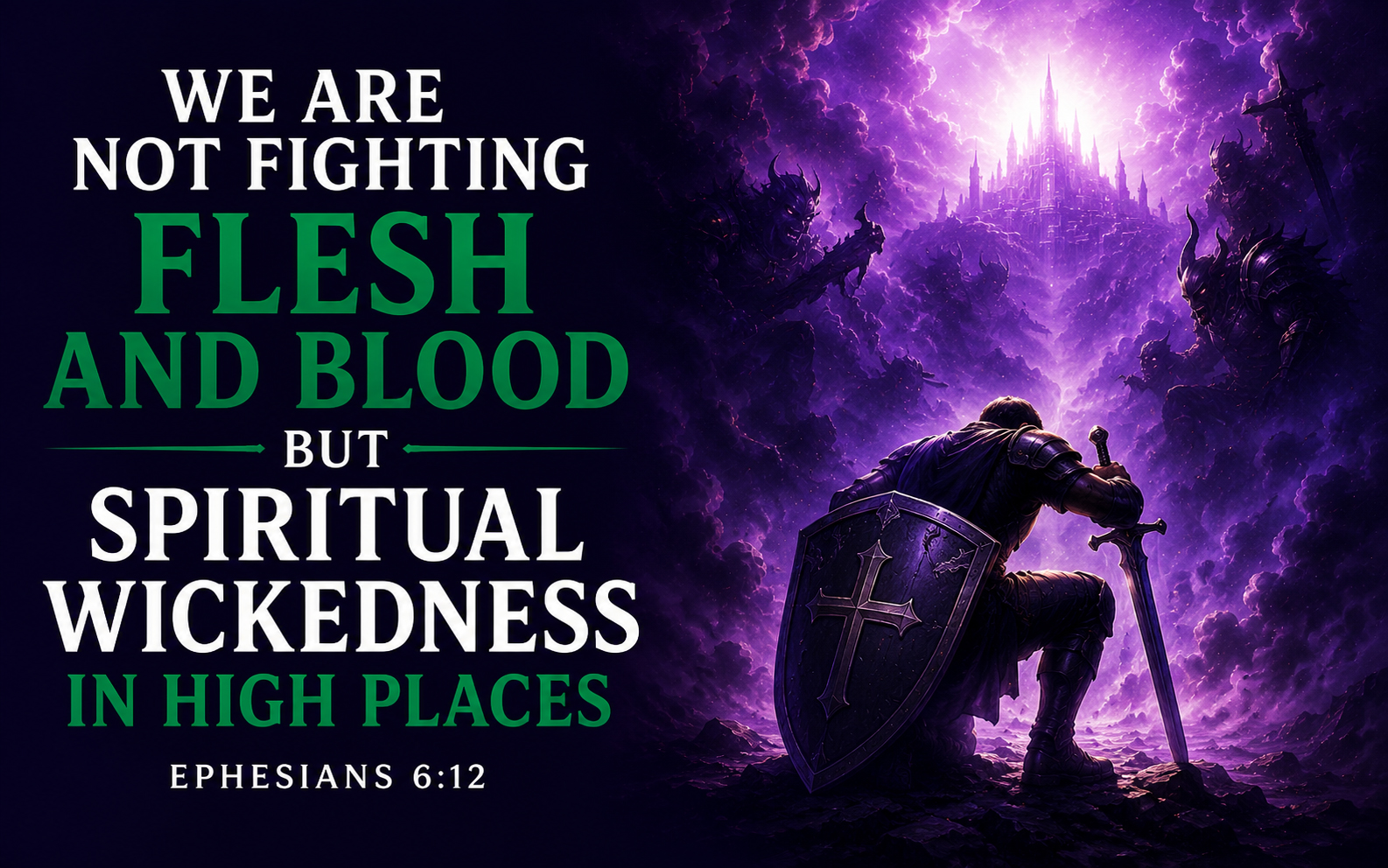
The Bible teaches clearly that human beings are involved in spiritual warfare. In Ephesians 6:12, the Apostle Paul writes:
“For we wrestle not against flesh and blood, but against principalities, against powers, against the rulers of the darkness of this world, against spiritual wickedness in high places.”
This passage is important because it reminds believers that not every battle is merely psychological, emotional, or physical. Some struggles have a spiritual dimension.
Paul does not tell Christians to fear demons, but he does tell them to recognize spiritual warfare and put on the “whole armor of God.” The Christian life is not simply a battle against bad habits or negative thinking. There are unseen spiritual forces that seek to deceive, tempt, oppress, and destroy.
At the same time, Christians must maintain balance. Not every problem is caused by a demon. Sometimes people are battling the flesh, emotional wounds, poor decisions, trauma, or mental illness. Discernment is necessary.
The Difference Between the Flesh, Trauma, Mental Illness, and Demonic Oppression
One of the greatest dangers in deliverance ministry is blaming demons for everything.
Discernment requires understanding the difference between the flesh, trauma, mental health conditions, and spiritual oppression.
The Flesh
The Bible teaches that human beings possess a fallen nature called “the flesh.” The flesh includes sinful desires, pride, lust, selfish ambition, greed, envy, and rebellion against God.
Not every temptation comes from a demon.
Sometimes a person simply struggles with the weaknesses of human nature. A man battling pride, laziness, jealousy, or sexual temptation is not necessarily demonized. Christians are called to crucify the flesh through repentance, discipline, obedience, and spiritual growth.
Trauma and Emotional Wounds
Trauma can deeply affect the mind, emotions, nervous system, and personality.
Abuse, neglect, rejection, abandonment, humiliation, sexual assault, bullying, and emotional violence can create profound emotional wounds. People may develop fear responses, anxiety, dissociation, hypervigilance, depression, emotional numbness, or self-hatred because of traumatic experiences.
Many people struggling spiritually are actually carrying unhealed wounds.
However, trauma can also become a place of spiritual vulnerability. Deep pain sometimes opens doors to bitterness, hatred, hopelessness, addiction, self-destruction, or tormenting spiritual oppression.
Mental and Neurological Conditions
Mental illness is real.
Conditions such as schizophrenia, bipolar disorder, OCD, epilepsy, severe depression, anxiety disorders, PTSD, and neurological abnormalities should be treated seriously and compassionately.
Christians should never shame people for seeking therapy, counseling, medical treatment, or psychiatric care. In some situations, medication and professional treatment may be necessary and helpful.
At the same time, spiritual oppression and psychological suffering are not always mutually exclusive. Human beings are spiritual, emotional, physical, and psychological beings simultaneously. In some cases, demonic influence may intensify torment, fear, confusion, compulsions, or destructive behavior patterns.
Discernment is necessary.
How Demons Gain “Legal Rights” or Open Doors
Many deliverance ministers use the phrase “legal rights” to describe areas where darkness gains influence in a person’s life.
This does not mean demons have legal authority equal to God. Rather, repeated agreement with sin, darkness, rebellion, or occult practices may create spiritual vulnerability.
Common open doors may include:
- occult involvement,
- witchcraft,
- tarot cards,
- spirit guides,
- astrology,
- New Age practices,
- pornography,
- habitual sexual sin,
- Incest
- unforgiveness,
- bitterness,
- hatred,
- chronic rebellion,
- substance abuse,
- trauma and abuse,
- generational patterns,
- occult objects,
- Freemasonry,
- soul ties,
- and persistent agreement with lies.
The Bible repeatedly warns against participation in occult and idolatrous practices because they invite spiritual deception.
Some people unknowingly open themselves spiritually through curiosity, experimentation, or repeated exposure to darkness.
Others become vulnerable through deep pain and trauma.
Unforgiveness Can Become a Spiritual Open Door
One of the clearest biblical examples of spiritual bondage connected to unforgiveness is found in Matthew 18 in the parable of the unforgiving servant.
Jesus describes a servant who was forgiven an enormous debt by his master, yet refused to forgive someone who owed him a much smaller debt. Because of his unforgiveness, Jesus said the servant was delivered over to the “tormentors” until he paid all that was owed.
Many deliverance ministers believe this passage reveals an important spiritual principle: unforgiveness can open the door to torment.
Bitterness, rage, hatred, resentment, revenge, and unresolved offense can become fertile ground for spiritual oppression. People who refuse to forgive often experience chronic torment, emotional agitation, mental anguish, depression, anxiety, intrusive thoughts, and spiritual heaviness.
Forgiveness does not excuse abuse or evil. It does not mean pretending that pain did not happen. But unforgiveness can imprison the wounded person emotionally, mentally, and spiritually.
This is one reason why forgiveness is frequently an important part of healing and deliverance ministry.
Generational Patterns and Spiritual Iniquity
Another controversial but important passage appears in Exodus 34:6–7, where God describes Himself as:
“merciful and gracious, longsuffering, and abounding in goodness and truth… visiting the iniquity of the fathers upon the children and the children’s children to the third and fourth generation.”
This passage does not mean children are automatically punished for the personal sins of their parents. Scripture also teaches individual responsibility for sin.
However, many families clearly experience repeating cycles of:
- addiction,
- abuse,
- violence,
- occult involvement,
- sexual brokenness,
- rage,
- suicide,
- abandonment,
- or destructive behavioral patterns.
Some of these cycles may be learned behaviors, trauma patterns, environmental influences, or psychological conditioning. But many Christians also believe there can be spiritual dimensions to generational bondage.
This is why some people notice recurring darkness running through family lines despite sincere attempts to change.
The good news is that Jesus Christ breaks cycles of bondage, sin, and spiritual captivity.
Common Signs of Demonic Oppression
No single symptom proves someone has a demon. Many struggles may have emotional, psychological, neurological, or medical explanations.
However, there are patterns frequently observed in cases of spiritual oppression.
Mental and Emotional Signs
Some individuals experience:
- intrusive blasphemous thoughts,
- uncontrollable rage,
- chronic fear and panic,
- irrational terror,
- hearing internal voices,
- severe self-hatred,
- suicidal thoughts,
- compulsive condemnation,
- obsessive darkness,
- or overwhelming hopelessness.
These experiences often feel invasive, tormenting, and difficult to control.
Spiritual Signs
Some people experience unusual resistance to spiritual things, including:
- hatred toward Jesus,
- agitation during prayer,
- violent resistance to Scripture,
- symptoms worsening during worship,
- blasphemous thoughts during prayer,
- intense attraction to occult practices,
- unexplained spiritual fear,
- unexplained fear of churches or ministers,
- or strong reactions when the name of Jesus is spoken.
Behavioral Signs
In severe cases, people may experience:
- compulsive self-destruction,
- addictions,
- personality shifts,
- blackouts,
- self-harm urges,
- uncontrollable sexual compulsions,
- irrational violence,
- or destructive behavior patterns they feel powerless to stop.
Physical Manifestations
Some people report:
- choking sensations,
- involuntary movements,
- sleep attacks,
- terrifying sleep paralysis experiences,
- unexplained physical manifestations during prayer,
- growling,
- or sudden physical agitation during ministry.
Again, caution and discernment are important. Not every unusual experience is demonic. Some may have medical explanations.
But spiritual manifestations are also clearly documented throughout Scripture.
Biblical Examples of Demonic Oppression
The Bible contains many examples of spiritual oppression.
Jesus encountered individuals who:
- self-harmed,
- lived among tombs,
- experienced supernatural torment,
- suffered physical infirmities connected to spirits,
- displayed violent behavior,
- or lost control of themselves.
In Luke 13, Jesus described a woman as being bound by “a spirit of infirmity” for eighteen years.
In the Gospels, a boy experienced seizures and violent manifestations associated with demonic activity.
King Saul experienced torment after opening himself to darkness through rebellion.
The Bible does not deny the existence of spiritual oppression. It presents it as a real part of spiritual warfare.
“Deliver Us From Evil”
Even in the Lord’s Prayer, Jesus taught believers to pray:
“Deliver us from evil.”
Some translations render this phrase as “deliver us from the evil one.”
This is significant because Jesus acknowledged that believers would face genuine spiritual opposition. The Christian life is not merely self-improvement or moral behavior. It is also spiritual warfare.
Christians are instructed to pray for protection, deliverance, discernment, and victory over evil influences.
The Bible never presents demons as more powerful than God. Jesus consistently demonstrated authority over darkness. Throughout the Gospels, demons recognized His authority and were driven out by His command.
The Authority Jesus Gave Believers
One reason many Christians struggle with the topic of deliverance is because they have never been taught the authority Jesus gave His followers over demonic powers.
In Mark 16:17–18, Jesus declared:
“And these signs shall follow them that believe; In my name shall they cast out devils…”
This statement is important because Jesus did not present casting out demons as something reserved only for a small group of elite ministers. He connected spiritual authority to believers acting in His name and authority.
Likewise, in Luke 10:19, Jesus told His disciples:
“Behold, I give unto you power to tread on serpents and scorpions, and over all the power of the enemy: and nothing shall by any means hurt you.”
The language of serpents and scorpions is widely understood by many Bible teachers as symbolic of demonic powers and spiritual opposition. Jesus was teaching that believers do not need to live in terror of darkness because spiritual authority ultimately belongs to Him.
However, these passages must be understood with balance and maturity.
Spiritual authority is not arrogance, theatrics, or emotional hype. Deliverance ministry is not about Christians becoming obsessed with demons or attempting to see demons behind every problem. Nor should these verses be used recklessly to deny medical wisdom, mental health treatment, or personal responsibility.
The authority Jesus gives believers is rooted in:
- submission to God,
- obedience,
- spiritual maturity,
- prayer,
- truth,
- humility,
- and dependence upon the Holy Spirit.
Even in Luke 10, after the disciples rejoiced that demons obeyed them, Jesus redirected their focus by saying:
“Do not rejoice that the spirits submit to you, but rejoice that your names are written in heaven.”
The greatest miracle is not power over demons. The greatest miracle is reconciliation with God through Jesus Christ.
Still, the New Testament clearly teaches that spiritual warfare is real and that believers are not helpless victims. Through Christ, Christians have authority to resist darkness, break agreement with sin, renounce occult involvement, confront spiritual oppression, and walk in freedom.
Why Skeptics Struggle With This Topic
Many people reject deliverance ministry because they have seen manipulation, sensationalism, fear-based preaching, or mentally ill people treated irresponsibly.
Those concerns are understandable.
Some ministries wrongly blame demons for every problem. Others ignore trauma, mental illness, counseling, medicine, and personal responsibility altogether.
But abuse does not eliminate truth.
The misuse of deliverance ministry does not mean spiritual oppression is imaginary any more than the misuse of medicine means sickness is fake.
The challenge is maintaining balance, wisdom, humility, and discernment.
Freedom Is Possible
The purpose of deliverance ministry is not to make people obsessed with demons.
The goal is freedom.
Jesus came to heal the brokenhearted, proclaim liberty to captives, restore identity, heal wounds, renew minds, and destroy the works of darkness.
Freedom often involves:
- repentance,
- forgiveness,
- renouncing sin,
- healing emotional wounds,
- renewing the mind,
- discipleship,
- prayer,
- spiritual authority,
- counseling,
- community,
- and sometimes medical treatment.
Healing and deliverance frequently work together.
No matter how dark the oppression may feel, Jesus Christ still delivers people from fear, torment, bondage, shame, addiction, and spiritual darkness.
There is hope.
The goal is not fear of demons.
The goal is freedom in Christ.
Register for the Inner Healing & Deliverance Conference
Come expecting breakthrough, healing, and transformation. Whether you need personal ministry or want to be trained to help others, this conference is designed to equip and empower you.
Schedule a Deliverance or Inner Healing Session
If you are looking for a deliverance ministry near Huntsville, Alabama, Deliverance360 offers ministry sessions designed to help individuals receive prayer, healing, and freedom in Christ.
To learn more or schedule a session, contact Deliverance360 today.
Phone: (866) 457-3277
Website: deliverance360.com